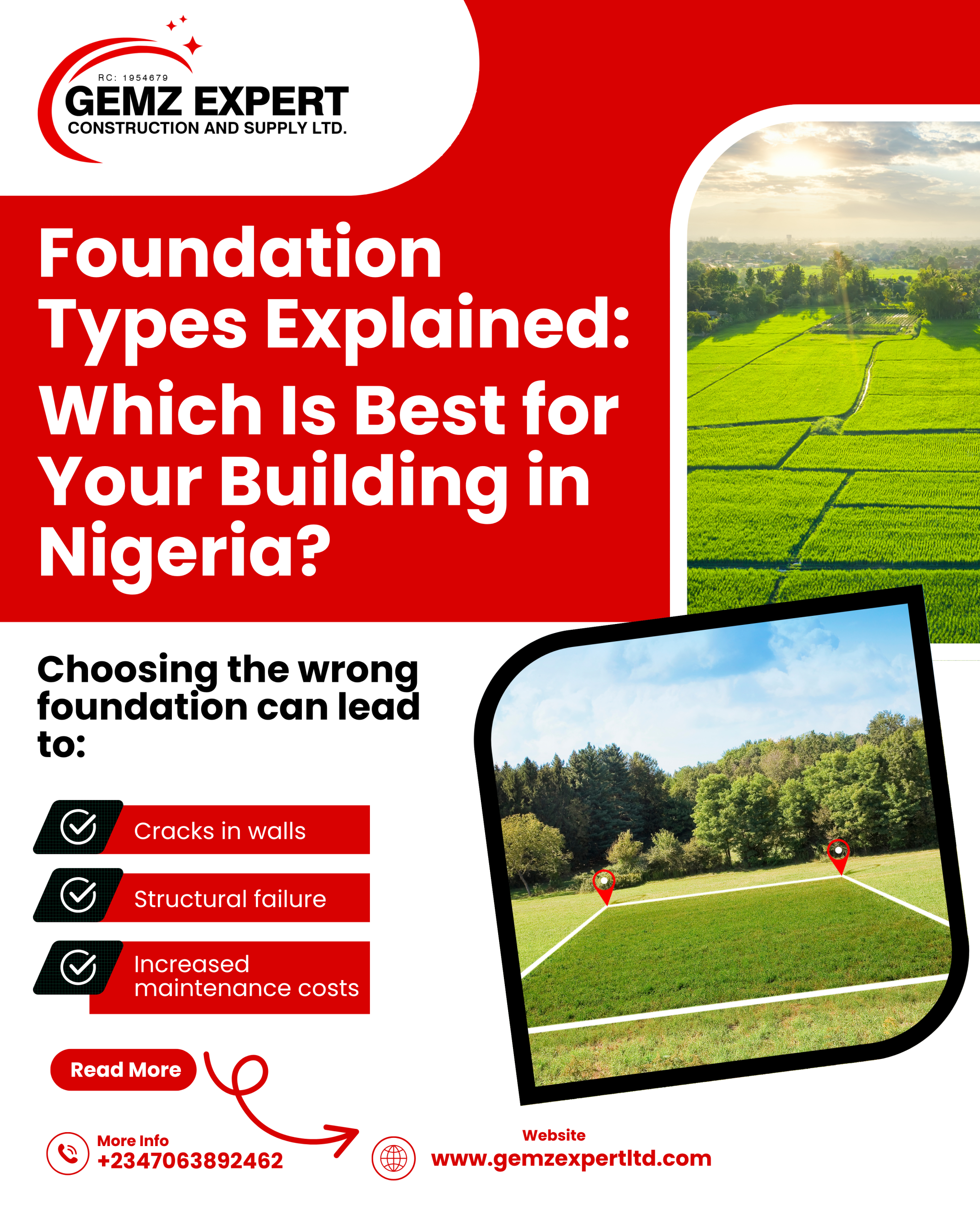
The foundation is the most critical part of any building. It determines the strength, durability, and long-term stability of your structure.
Choosing the wrong foundation can lead to:
- Cracks in walls
- Structural failure
- Increased maintenance costs
So, the question is: Which foundation type is best for your building in Nigeria?
This guide explains the main types of foundations, their advantages, and how to choose the right one for your project.
What Is a Building Foundation?
A foundation is the base structure that transfers the weight of a building to the ground safely.
Its purpose is to:
- Support the building load
- Prevent settlement or sinking
- Provide stability against environmental factors
Types of Building Foundations in Nigeria
Foundations are broadly divided into two categories:
1. Shallow Foundations
These are used when the soil near the surface is strong enough to support the building.
A. Strip Foundation (Continuous Footing)
This is one of the most common foundation types in Nigeria.
Best for:
- Bungalows
- Simple residential buildings
Features:
- Concrete strip runs under walls
- Load is distributed evenly
Advantages:
- Cost-effective
- Easy to construct
Limitations:
- Not suitable for weak or waterlogged soil
B. Pad Foundation (Isolated Footing)
Used where columns carry the load instead of walls.
Best for:
- Framed structures
- Duplexes
Features:
- Individual concrete pads under columns
Advantages:
- Strong and stable
- Suitable for moderate loads
C. Raft Foundation (Mat Foundation)
A large concrete slab covering the entire building area.
Best for:
- Weak or soft soil
- Areas prone to settlement
Advantages:
- Spreads load across the entire surface
- Reduces risk of uneven settlement
Limitations:
- Higher cost compared to strip foundation
2. Deep Foundations
Used when surface soil cannot support the building.
A. Pile Foundation
Long columns (concrete, steel, or timber) driven deep into the ground.
Best for:
- Swampy areas
- Coastal regions
- High-rise buildings
Advantages:
- Very strong and durable
- Suitable for heavy structures
Limitations:
- Expensive
- Requires specialized equipment
B. Pier Foundation
Uses cylindrical columns drilled deep into the ground.
Best for:
- Areas with unstable topsoil
- Medium-load structures
Factors to Consider When Choosing a Foundation
Choosing the best foundation is not guesswork—it depends on several key factors:
1. Soil Type
- Sandy soil → good for shallow foundations
- Clay soil → may require deep foundation
- Waterlogged soil → raft or pile foundation
2. Type of Building
- Bungalow → strip foundation
- Duplex → pad or raft foundation
- High-rise → pile foundation
3. Budget
- Strip foundation → most affordable
- Raft foundation → moderate cost
- Pile foundation → most expensive
4. Environmental Conditions
Consider:
- Flood risk
- Drainage
- Groundwater level
5. Load of the Structure
Heavier buildings require:
- Stronger
- Deeper foundations
Common Foundation Mistakes to Avoid
Many building failures in Nigeria are caused by foundation errors.
Avoid:
- Skipping soil testing
- Using low-quality materials
- Hiring unqualified workers
- Ignoring professional advice
Professional Recommendation
There is no “one-size-fits-all” foundation.
The best approach is:
- Conduct a soil test
- Consult a structural engineer
- Choose based on data—not assumptions
Final Thoughts
Your foundation determines the life span of your building.
Investing in the right foundation will:
- Prevent structural problems
- Save money long-term
- Ensure safety
Build Right with Gemz Expert Limited
At Gemz Expert Limited, we help you:
- Conduct proper site analysis
- Choose the best foundation type
- Execute high-quality construction projects
Contact us today to build on a solid foundation—literally.